About Bertolotti Syndrome (BSy)
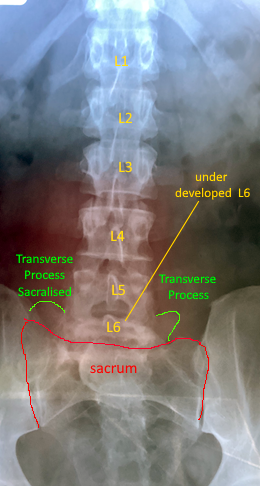
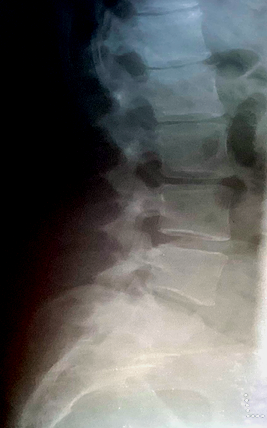
Bertolotti Syndrome (BSy) refers to a condition where a lumbosacral transitional vertebra exists. It refers to a vertebra from the lumbar spine, particularly L5, that exhibits an enlarged transverse process (which is a bone projection from the back of the vertebra) and partially fuses with the sacrum or ilium.
It is a rare but severe condition that negatively impacts the quality of life of individuals suffering from it, since it is hard to control. It is brought about by a congenital abnormality of the lowest vertebrae in the spine, which is known as the lumbar transitional vertebra (LSTV). Individuals with Bertolotti Syndrome (BSy) have an LSTV that is partially fused with the sacrum. There should be an increase in the awareness of causes, symptoms, and treatment of Bertolotti Syndrome (BSy) for it to significantly improve the quality of life of sufferers.
While research indicates varying causes of Bertolotti Syndrome (BSy), one of the commonest causes is the anatomical abnormality of the lower back. If an individual has an abnormal lower lumbar vertebra (L5/L6/S1), then he/she is likely to experience difficulties with the functioning of his/her lower back. One of the anomalies of the lower lumbar vertebra is the lumbosacral transitional vertebra (LSTV). An LSTV is the abnormal development of a vertebra in the lower back region, which involves the fusion of a vertebra from the lumbar spine and the sacrum in the pelvic region. People with an LSTV do not experience any symptoms. However, recent studies show that up to 30% of individuals with an LSTV can experience some symptoms and hence need clinical treatment (Crane et al., 2021).
The pain experienced in the lower back of patients suffering from this condition can radiate to the sides of the lower back, buttocks, hips, and even the legs. The pain that a patient feels can be exacerbated by the performance of activities, sitting or even standing for long periods of time. The pain associated with Bertolotti Syndrome (BSy) can be debilitating and affect a person's daily activities as well as his/her quality of life. Other symptoms that can be experienced include numbness and tingling in the lower extremities and muscle weakness. This can cause a patient to undergo a cycle of pain and inactivity, which can also make them feel anxious and depressed (McGrath, Rabah, & Steinmetz, 2021).
Through stabilizing the region through bracing, pain management through physical therapy and medications, there are quite a number of paths that can be used by individuals suffering from Bertolotti Syndrome (BSy) to manage their pain. Ahn, Seo, Ju, and Kim (2024) give a description of the "conservative management" of Bertolotti Syndrome (BSy), explaining how initial treatment can be administered without surgery. Many patients can manage to live active lifestyles while experiencing relief from symptoms.
While most of the individuals with a lumbosacral transitional vertebra (LSTV) are asymptomatic and do not require treatment, the development of Bertolotti Syndrome (BSy) due to the LSTV can cause significant chronic low back pain, which can affect an individual's activities and reduce his/her quality of life.
Since Bertolotti Syndrome (BSy) is a complicated condition, it often requires a combination of different treatments in order to treat patients appropriately. While the combination involves both non-surgical and surgical treatments, it is only in some situations that the latter is necessary in order to assist the patient to return to normal functionality. In some instances, it becomes necessary to surgically remove the transitional vertebra in order to return the spine to normal. Postoperatively, most patients experience significant relief from their pain; however, just like any other surgery, there are some risks and potential complications associated with it. It is important to note that resections are not for everyone.
One of the most crucial factors that healthcare practitioners need to know in regard to Bertolotti Syndrome (BSy) is its differentiation from other conditions that involve lower back pain. The symptoms of herniated discs and spondylolisthesis patients, for example, can be similar to those of Bertolotti Syndrome (BSy). It is, however, vital to understand that Bertolotti Syndrome (BSy) can occur alongside other conditions. This is why healthcare professionals need to update their knowledge in this area since patients suffering from this condition can remain undiagnosed for years, even decades.
There are different causes of Bertolotti Syndrome (BSy), and hence different treatment options are available. For example, degenerative disc disease could be because of a herniated disc, while spondylolisthesis results from the fracture of the pars interarticularis (a thin segment of bone joining the facet joints in the back of each vertebral segment). Therefore, patients need to have a proper diagnosis of their condition in order to be administered appropriate treatment (Tsegaye & Muffly, 2026).
To sum up, Bertolotti Syndrome (BSy) is a unique condition that poses certain challenges to its sufferers and treatment. The most common challenge is chronic pain, which affects patients differently and also causes functional limitations. Such challenges can be addressed through various types of treatment, including non-surgical and surgical treatment. With appropriate treatment, patients will be able to manage their pain and improve their quality of life. Sufferers of Bertolotti Syndrome (BSy) require proper care and treatment by healthcare professionals with the knowledge of Bertolotti Syndrome (BSy).